Sunday, May 15, 2011

Book Review: The Sacred Journey by Charles Foster

Charles Foster brings a fresh look to an all but forgotten discipline in The Sacred Journey.  Mainline Christianity does not practice or, for the most part, even talk about pilgrimages anymore – a truth that Foster finds reprehensible and saddening.  In this installment, the last of eight, to The Ancient Practices Series, he explores Biblical support for pilgrimages, working through the narrative and highlighting favored wanderers, as well as looking at what a pilgrim may expect along their journey and interacting with some of the key opponents to the discipline.  Along the way, this work is riddled with portions of accounts from those who have made such pilgrimages.

Unlike my experience with several other volumes from this series, The Sacred Journey often recounts passages or directly cites the Bible (a trait that was sadly deficient in others). Regarding Biblical support, Foster sets out to “articulate a theology of pilgrimage” (xiii).  In an overly simplified form, it goes something like this: traveling is fundamental to the way we are designed which can be nicely laced into the discussion of imago Dei – we’re created in God’s image and so in our journeys, we encounter “the King himself, inveterate walker that he is” (163).  Foster then flies through Biblical narrative, stopping to highlight some specific sojourners as well as categoric wanderers.  He begins this discussion in Genesis by considering Cain (the farmer tied to his land) and Abel (the shepherd always on the move).  He moves on through the wanderings of Israel and all that they learn of God through them, even highlighting the pilgrimage inherent in keeping several of the commanded feasts.  Foster proceeds into the New Testament, citing Jesus’ words (“follow me” Matt 9:9; “foxes have holes …” Matt 8:20) and affinity for the outsiders, the rejected wanderers.

Foster urges us to embark on pilgrimage to get rid of old rubbish to which we so tightly cling as well as to gain something new.  He points out that, for the Christian, pilgrimage is more about the journey than the destination.  It is the journey that forces us to leave comforts behind, to shed preconceived notions, to embrace the provision of God and see Him anew.  The trials, walking long miles, enduring rain or heat, accepting company and aid from fellow travelers and being the same to them - all of these help us to learn important things about ourselves and about God.  Foster argues that pilgrimage, with its strain on the body, is the perfect antidote for the gnostic mentality that still rears its head today.

In her forward to the book, Phyllis Tickle (general editor of the series) says, “every one of you who reads this book will find at least one thing you totally disagree with and a whole handful of those you want to question.  Please do so” (xii).  This certainly holds true.  Foster unapologetically draws from pilgrimage literature and accounts from many faiths, including Hindu, Buddhist and Muslim.  Inviting travelers to the outskirts, he refers to God as a “hippie.”  At times his view drifts heavily toward mysticism and seems to flirt with universalism.  However, when he ventures onto shaky terrain, Foster usually regrounds himself in orthodox confession – perhaps this too is an example of pilgrimage.

All considered, this was an excellent read.  It was a joy to consider the ideas Foster presented and to continue to ruminate on them, evaluating how each day could be offered as a pilgrimage seeking God.  As to whether I’ll ever physically embark on a proper pilgrimage, I don’t know.  Where, when, how?  According to Foster, these aren’t the most important considerations.  He offers this pithy maxim, “wherever you go, go” (135).


Disclosure of Material Connection: I received this book free from the publisher through the BookSneeze®.com <http://BookSneeze®.com> book review bloggers program. I was not required to write a positive review. The opinions I have expressed are my own. I am disclosing this in accordance with the Federal Trade Commission’s 16 CFR, Part 255 

Monday, April 18, 2011

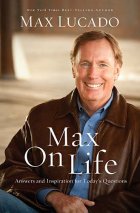
Book Review: Max on Life: Answers and Insights to Your Most Important Questions by Max Lucado

As I approached this addition to the Lucado library, I was a bit leery, perhaps even skeptical, based solely on the cover.  Generally, Lucado’s books come with some sort of artwork that illustrates the main idea of the book in a clever and understated way.  What is the projected main idea if the cover is engulfed with the author’s picture?  In my opinion, this has generally shown a leaning toward overpublicizing the importance of the person to the detriment of the message they have to give (cases in point: Joel Osteen, Joyce Meyer or T.D. Jakes).

Hesitations aside, I dove into this book.  What I found (as was publicized) was snippets, usually about a page or two long, with a question that has been posed to this pastor/author and his response.  Lucado’s responses are always heartfelt and warm.  Often they’re presented in his signature story telling fashion as he weaves an anecdote from his life or the world around into a nice answer.  Other times he offers Scripture verses or passages, giving a brief commentary on them and allowing the person to come to their own conclusions from these holy words.

The questions are divided up nicely into several categories: hope, hurt, help, him/her, home, haves/have nots, and hereafter.  The questions (which I’ve mentioned are 1-2 pages) are short enough to jump in and tackle several of them without being overwhelmed by a sense of committing a great deal of time to a long subject. 

Just a few of the questions asked are following.
  • ·      I know the Bible says I’m forgiven.  But my conscience says I’m not.
  • ·      My anxiety is affecting my health, family and work.  Where do I turn?
  • ·      Exactly how does [the Holy Spirit] function in the life of a believer?
  • ·      The seven-year-old son of our neighbor died last week.  They are devastated.  So are we.  What can we tell them?


All in all, this is a fine read and can equip you with some pithy answers to some questions that you may have or may encounter from friends.


(As always ... the disclaimer junk:)

Disclosure of Material Connection: I received this book free from the publisher through the BookSneeze®.com <http://BookSneeze®.com> book review bloggers program. I was not required to write a positive review. The opinions I have expressed are my own. I am disclosing this in accordance with the Federal Trade Commission’s 16 CFR, Part 255

Friday, March 25, 2011

Book Review: Tithing: Test Me In This by Douglas LeBlanc

“I think most American Christians are living in sin by the way they spend their money” (page 27).

In his addition to the Ancient Practices Series, Douglas LeBlanc pursues the concept of tithing.  Tithing is a particularly touchy subject; it is one of the ancient practices that most churches still observe, which requires personal sacrifice on the part of the giver.  That can makes it quite difficult for Christians to act faithfully in this area, particularly in these hard economic times. For this reason, people can get very uncomfortable when discussing it.  Admittedly, I have even been hesitant in reading this book.  Though recently we have been much more faithful to the Lord in the practice of tithing then at other times in our lives, I still anticipated being greatly convicted by the work of LeBlanc on tithing.  I had expected a Biblical and historical study on the practice.

Such was not to be the case with this book.  Rather than an in depth study on tithing, this book is a compilation of stories about people who have been faithful to the practice and the ways they’ve been blessed through it.  In his introduction to the book, LeBlanc acknowledges, “I am no theologian or exegetical writer.  To the extent that I am capable of exhortation or teaching, it is mostly through telling stories of other people’s lives” (xx).  Through their stories, these people’s lives propose some pieces of sound theology (or at least advice) on tithing; they will encourage you and may even challenge.


Disclosure of Material Connection: I received this book free from the publisher through the BookSneeze®.com <http://BookSneeze®.com> book review bloggers program. I was not required to write a positive review. The opinions I have expressed are my own. I am disclosing this in accordance with the Federal Trade Commission’s 16 CFR, Part 255

Saturday, March 19, 2011

Awesome video

<iframe src="http://player.vimeo.com/video/20960385" width="400" height="225" frameborder="0"></iframe><p><a href="http://vimeo.com/20960385">G.O.S.P.E.L.</a> from <a href="http://vimeo.com/humblebeast">Humble Beast Records</a> on <a href="http://vimeo.com">Vimeo</a>.</p>

Wednesday, March 9, 2011

Book Review: Sabbath by Dan Allender

"My soul needs more than a respite; I need a sanctuary in time.  I desperately need to hear the delight of the Father, Son, and Holy Spirit bubble up through the beauty of creation" (page 193).


Dan Allender brings his introspective and vulnerable passion to Sabbath, his installment to The Ancient Practices Series.  

It is certainly not an exhaustive treatment of the Sabbath, although it was not intended to be.  For instance, there is only a cursory mention of the Sabbath year used to connect it to the year of Jubilee.  Even Jubilee is only dealt with briefly to address the concept of justice in relation to Sabbath.  But, as I said, Allender's book is not meant to be an exhaustive treatise but meditative look at the Sabbath as a spiritual discipline.

He begins by introducing the Sabbath as the epitome of delight in this life, a theme to which he returns often in the book.  For most, this seems to be a completely foreign concept, one which must be driven home again and again in differing ways.  "The Sabbath is far more than a diversion; it is meant to be an encounter with God's delight" (12).  We tend to find it hard to believe that such pleasure is acceptable, even worshipful.  With that groundwork laid, Allender demonstrates how little we understand of the Sabbath, how few Christians observe anything resembling a Sabbath and exposes misconceptions of the Sabbath.  While a few minor errors slipped through the proofreading process, this doesn't distract from the message.

Celebrating the Sabbath, whether in simplicity or extravagance must be greater than our simple human efforts.  Allendar suggests it is a day for beauty, sensuality and feasting.  Through it God invites us to play, to risk, to enjoy Him and His creation.  We are to laugh deeply, share intimately and enjoy thoroughly.  Sabbath "is the day that bridges two great events in time: creation by God and the re-creation of the new heavens and earth by God" (56).  In Sabbath, God invites us to shake off our cares and meet with our beautiful Creator.

As with other works from The Ancient Practices Series, Sabbath is light in Scripture.  I won't say that the topic and the discussion within the book is un-Scriptural (though there are moments where he reaches to the fringe of what I can see as orthodox theology), but Allender doesn't spend time expositing texts; (as I continue to say) that's not his purpose here.  His take on the Sabbath is eye-opening.  It is a good work that will be beneficial to consider.

Allender also points out early on that "to read a book on the Sabbath and not enter the holy day is somewhat like waiting for an exquisite five-star meal and then forgetting to eat when it arrives" (15).  Knowing the truth in his point, I've tried to make attempts to recognize opportunities for Sabbath (although it's certainly not like spending a full day).  For instance, when my wife and I are able to sit on a blanket outside in the grass and watch the kids play on a Friday afternoon following my last class...ah, that's a good time.  I'm trying to see that not as just a breather, but to thank God for the gift of that time.  In another small exercise of Sabbath, I took a few minutes to write to a friend, thanking him for the way he demonstrates Sabbath and encouraging him (at least I hope it was encouraging to him).

Anyway, if you read the book, I hope you'll take some time to let me know what you think.  I'd love to enter into some dialogue with you.

Disclosure of Material Connection: I received this book free from the publisher through the BookSneeze®.com <http://BookSneeze®.com> book review bloggers program. I was not required to write a positive review. The opinions I have expressed are my own. I am disclosing this in accordance with the Federal Trade Commission’s 16 CFR, Part 255

Monday, March 7, 2011

Learn to Simply Enjoy

As I lay myself down in bed tonight, a bird alighted in our courtyard and began singing.  It was an elaborate and beautiful song, one I can't describe so I won't try.  The song was so clear and beautiful that I decided to capture a recording of it to play back later.

Quietly I slipped out of bed and grabbed my laptop.  Taking it to the desk by the window, I opened it up and accessed the audio recording program - all the while, the haunting song continued.  I named the new project (bird song - nocturnal) and clicked the button to "Create" - still the bird sang.  Just before I hit the record button, he stopped singing.

After recording a few minutes of quiet night air, I came to this conclusion: the song is not for me to capture.  Truly the song isn't for me at all, but I'm privileged to be witness to it.  Admitting this truth, I went back to the desk, stopped the recording and walked away with the computer.  As I sat to write, you guessed it, the bird started singing again.

I just laughed.

Thursday, March 3, 2011

One year

Today is Focus Day here at Dallas Theological Seminary - the main visitation day for possible incoming students.  It's been a very surreal time watching the preparations around campus, the arrival of some of the potential students and then remembering that one year ago, that was us.  We stepped onto the DTS campus for the first time one year ago.  Excited and nervous, it was a time to see the school and explore what God may have in store for us.  I had applied but was not yet accepted.  We weren't sure if God was going to open up the possibility of seminary to us or if this would be the place.  We really didn't know what was going to happen.

That was one year ago.  We found out (at one of the Focus sessions) that I'd been accepted.  Prayerfully considered that God was calling us to move to Dallas and pursue school on campus full-time.  And the whirl wind proceeded from there.

One year ago.  Wow.  Is that really all it was?

As we've been considering this in disbelief and excitement, we're also reminded of our friends Justin and Megan Bebb and who are amidst that same kind of whirlwind and Jeremy and Emily Karg who (to my knowledge) are still praying for God to open that way to them.  We're praying for you guys.  We love you.